
Single News
Private Label Ornaments: Artwork, Sampling, and Approval Workflow
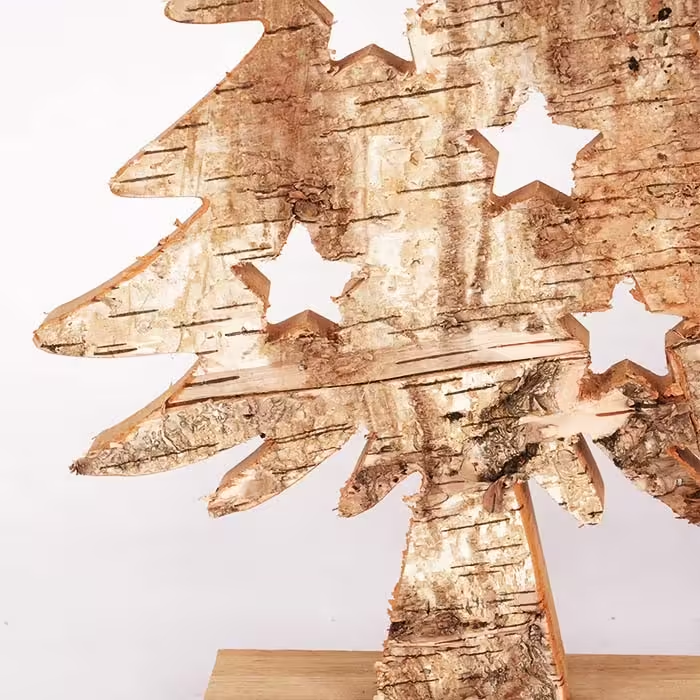
Table of Contents
Private-label development succeeds when design, artwork, product construction, and packaging follow the same revision-controlled approval path. For professional buying teams, private label ornaments are a requirement sheet problem as much as a design choice, because each handmade detail must work across an entire order.
The decision loses control when approving private label ornaments from appearance alone. A correct product can still be unusable when an old logo, wrong label, unapproved color, or obsolete pack file reaches production. A repeatable order needs measurable checkpoints that both buyer and supplier can use.
The following framework supports private-label holiday brands, seasonal product developers, importers, quality teams, and retail buying teams. It explains how to set out private label ornaments, examine reference units, compare factory responses, and prepare an order file without relying on vague claims.
Freeze the Brand Brief Before Artwork Begins
In a real project involving private label ornaments, private-label development succeeds when design, artwork, product construction, and packaging follow the same revision-controlled approval path. A correct product can still be unusable when an old logo, wrong label, unapproved color, or obsolete pack file reaches production. The buyer must decide which outcome matters most before reviewing decorative options.
The working brief for private label ornaments therefore starts here: Name the product owner, artwork owner, approval stages, file rules, reference unit status, open-point log, and final production reference. That decision gives the production team a commercial context for every later drawing, reference unit, and packing question.
- Retailer-exclusive ornament motif – connect this application to design and bill of materials.
- Branded hanging decoration – connect this application to artwork master and print method.
- Custom seasonal gift set – connect this application to color and finish references.
- Private-label mixed-material range – connect this application to reference unit stage and revision.
Create One Approval Trail for Product and Packaging
A usable project file for private label ornaments must connect design and bill of materials with artwork master and print method. Record who supplied each input, the revision date, and the decision that the information supports.
The next layer combines color and finish references with reference unit stage and revision. These points influence how the item is reviewed in use, not merely how it appears in an isolated product image.
Complete the file with retail-pack file and production approval record. Keeping these details beside the product requirement sheet prevents late packaging or assortment decisions from changing the approved result.
- Design and bill of materials – mark the source, approval status, and acceptable range.
- Artwork master and print method – mark the source, approval status, and acceptable range.
- Color and finish references – mark the source, approval status, and acceptable range.
- Sample stage and revision – mark the source, approval status, and acceptable range.
- Retail-pack file – mark the source, approval status, and acceptable range.
- Production approval record – mark the source, approval status, and acceptable range.
Match Materials and Finishes to the Brand Standard
Material language for private label ornaments must distinguish the visible material, internal structure, finish, lining, adhesive, and hardware where relevant. Each material and component must have an owner, approval reference, and intended finish so revisions do not create undocumented substitutions.
If environmental or sourcing language will be used for private label ornaments, request evidence for the exact material and transaction. The Forest Stewardship Council chain-of-custody guidance explains how eligible forest-based material is tracked through a supply chain.
- Component-level bill of materials
- Approved color and finish references
- Attachment, adhesive, and hardware details
- Artwork and pack material revision
Control Ornament, Card, and Hanging Dimensions
Dimensions for private label ornaments must be tied to the shelf, carton, display, room fixture, or product that sets the limit. Dimension controls must reflect hanging, standing, retail-pack, and carton requirements rather than treating the item as an isolated reference unit.
Test private label ornaments with the real contents and placement rather than estimating capacity from a catalog image. Record critical tolerances separately from cosmetic variation.
- Critical product dimensions
- Hanging or standing geometry
- Artwork and label area
- Retail-pack dimensions
- Carton and assortment fit
Inspect Artwork Position and Handmade Construction
Construction checks for private label ornaments must examine the areas that carry load, touch furniture, face the customer, or receive repeated handling. Translate the approved reference unit into defect examples, attachment checks, color limits, artwork rules, and assortment checks before production begins.
For lot inspection of private label ornaments, buying teams may use a documented sampling plan. ISO 2859-1:2026 describes acceptance sampling by attributes, but the buyer still needs to set out defect classes and the inspection level for the actual order.
- Revision matches the approval
- Attachments secure
- Color and finish in range
- Artwork correct and legible
- Assortment complete
- Packing prevents damage
Manage Logos, Colors, Copy, and Revision Control
Customization of private label ornaments must answer a fit, branding, merchandising, or handling requirement. Controlled development depends on revision numbers, approved files, reference unit status, and one decision record shared by buyer and supplier.
Each custom change to private label ornaments needs one controlled reference: drawing, color target, artwork file, approved reference unit, or packing diagram. Retain the revision trail so production does not follow an obsolete instruction.
- Motif and component mix
- Color and finish
- Hanging or standing construction
- Brand artwork and labels
- Retail-pack configuration

Use Separate Approval Gates for Each Risk
A reference unit of private label ornaments supports approval only if its purpose is clear. Separate material examine, construction approval, artwork approval, performance checks, and final packing approval when one reference unit cannot answer every question.
Test private label ornaments in the intended setting and document the result. Label every reference unit by stage and revision, record open points, and do not allow an attractive but obsolete reference unit to become the production reference. Keep the approved reference and revision record with the purchase file.
- Revision and file check
- Dimensional and attachment inspection
- Display and handling trial
- Artwork proof examine
- Final packed-reference unit approval
Verify Claims, Labels, and Market Requirements
Requirements for private label ornaments change with destination, intended use, materials, labeling, and whether the item reaches consumers. Ask for a bill of materials and product-specific documents instead of a generic certificate bundle.
Buying teams placing private label ornaments on the EU consumer market must examine the European Commission product-safety guidance and obtain market-specific advice. Do not claim a certification, recycled content, or compliance status without valid evidence for the product.
- Revision-controlled requirement sheet
- Approval and open-point log
- Inspection checklist
- Artwork master
- Packing and assortment sheet

Protect Branded Surfaces Through Packing and Transit
Packing for private label ornaments belongs in the same development process as the product, because compression, rubbing, moisture, and unused carton space can change both condition and logistics. The final approval must include the retail pack and master-carton method because packaging can alter the product after the appearance reference unit is accepted.
The the holiday development packing file must state units per carton, orientation, protection, labels, and carton dimensions. Examine IPPC information on ISPM 15 if regulated solid-wood packaging is used, and use the ICC Incoterms rules to clarify delivery responsibilities in the contract.
- Final packed reference unit
- Protection by component
- Label and barcode verification
- Assortment count
- Carton drop and handling plan defined by buyer
Release Production Only From the Approved Master File
Place factory responses for private label ornaments against the same brief. A concise answer with dimensions, materials, tolerances, reference unit stages, packing, and document scope is more useful than a long presentation that avoids specific commitments.
Before approving the holiday development, turn unanswered questions into written actions. The final request for quotation must distinguish the decision owner, target date, destination, quantity range, and files that form the approved requirement sheet.
- Project calendar and decision owners
- Design and bill of materials
- Sample stages
- Quality and inspection records
- Retail pack, carton, and delivery milestone
| Decision area | Weak brief | Decision-ready brief |
|---|---|---|
| Revision | Latest reference unit | Numbered file and reference unit status |
| Approval | Buyer likes design | Signed decisions and open-point log |
| Quality | Match reference unit | Defect examples and measurable checks |
| Artwork | Logo file supplied | Master file, proof, method, and placement |
| Assortment | Mixed designs | SKU list, ratios, labels, and carton map |
| Pack | Approve later | Retail and master pack approved before production end |
Related Product and Sourcing Resources
Use these pages to compare real product structures and deepen the private label ornaments brief before contacting a supplier:
- Christmas series collection – examine available product directions
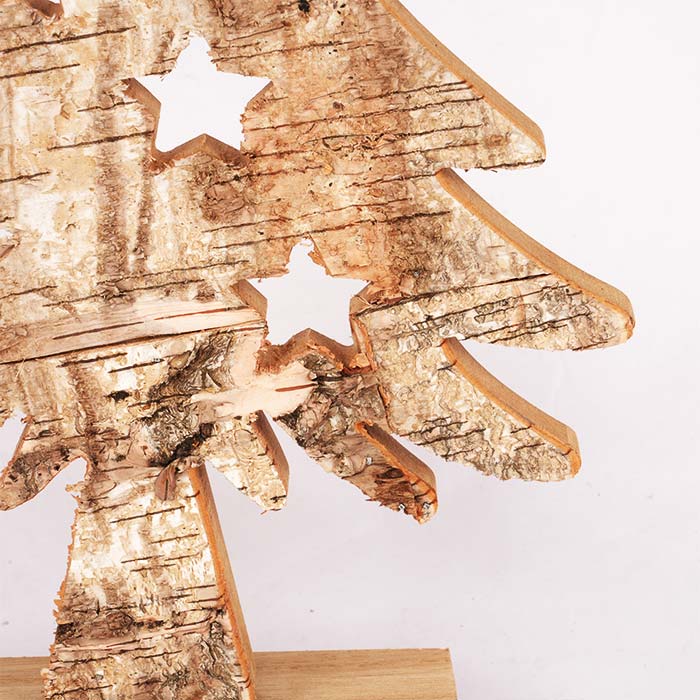
- Christmas tree ornament example – examine a standing format
- custom Christmas ornament guide – understand wholesale customization
- bulk-order quality checklist – apply structured quality thinking
- contact Yixuan Crafts – start a seasonal development brief
Frequently Asked Questions
What must buying teams set out before requesting private label ornaments?
Set out the use case, user, placement, dimensions, materials, quantity range, target market, customization, reference unit stages, packing, and delivery destination. A clear brief makes factory responses easier to compare.
How must a production reference unit be evaluated?
Check the reference unit with real contents and in the intended setting. Examine revision and file check, dimensional and attachment inspection, and display and handling trial, then record the approved result.
Can private label ornaments be customized?
Customization may include motif and component mix, color and finish, and hanging or standing construction. Feasibility and repeatability must be confirmed through reference units before production.
Which documents must a buyer request?
Ask for an accurate bill of materials, product-specific test or inspection records where applicable, labeling details, packing specifications, and evidence supporting any environmental or certification claim.
How must private label ornaments be packed for export?
The packing method must address final packed reference unit, protection by component, and label and barcode verification. Approve the packed reference unit and carton information before production is complete.
Move Private Label Ornaments From Brief to Approved Order
Good private label ornaments sourcing is a sequence of decisions: application, requirement sheet, material, fit, construction, reference units, documentation, packing, and delivery. When those decisions are written down, buying teams can compare proposals without relying on assumptions.
To discuss private label ornaments for a retail, hospitality, or private-label program, contact Yixuan Crafts with reference images, dimensions, materials, quantity range, destination, and intended use. A detailed brief allows the team to confirm feasibility and identify the next reference unit step.
Word-of-mouth product collection
It covers a wide range of high-quality products, combining innovative design with practical performance, meeting the needs of various scenarios and gaining wide recognition from users.
Latest post


Contact Info
Shangshihe Village, Yushan Town, Linshu County, Shandong Province

Ingenious work, quality presentation
It brings together a series of core products, presenting a panoramic view from design details to functional advantages, intuitively presenting quality and innovation.
What is the wood material and environmental friendliness of wooden boxes?
Made of FSC certified ash wood and finished with natural wood wax oil, it complies with EU environmental standards.
How to prevent moth damage and cracking through daily maintenance?
Wipe it with a dry cloth every month to avoid moisture. You can apply a small amount of beeswax to maintain the wood surface.
Monthly production capacity and delivery time for large orders?
With a monthly output of 30,000 pieces and a 6,000-square-meter base, we have sufficient materials and large orders can be delivered in batches.
What packaging is used for international shipping? Is it moisture-proof?
Waterproof kraft paper + foam corner protectors, with silica gel desiccant, suitable for sea/air transportation.
Can it be adapted to different home styles such as minimalist and retro?
Supports color change (original wood / white paint) and pattern adjustment to match a variety of scenes.
Are manual differences considered quality issues?
These are normal traces of craftsmanship. Each piece retains its uniqueness and is qualified as long as it does not affect its use.