
Single News
Woven Storage Basket Manufacturer: 12 Checks Before Bulk Orders
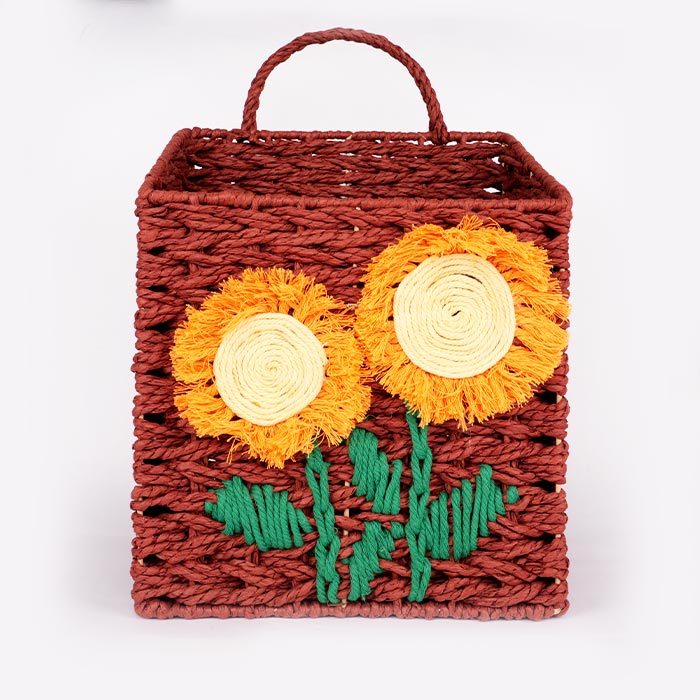
Choosing a woven storage basket manufacturer is not simply a matter of comparing attractive samples. For importers, home décor brands, wholesalers, sourcing companies, and retail buyers, the real challenge is finding a supplier that can reproduce the approved design consistently across hundreds or thousands of handmade pieces.
Woven baskets combine decorative value with practical storage, which means buyers need to evaluate both appearance and performance. Material variation, frame construction, weaving tension, handle strength, dimensional tolerance, moisture control, packing methods, and production capacity can all influence the success of a bulk order.
A good-looking sample may win initial approval, but a reliable sourcing program depends on whether the same quality can be repeated during mass production.
This guide explains 12 practical checks buyers should complete before selecting a woven storage basket manufacturer, with particular attention to iron-frame baskets, paper rope designs, plant-fiber weaving, private-label development, and export packaging.
Buyers developing a new organization or home décor line can first review the iron-frame woven storage basket collection to understand common structures and material combinations.
Table of Contents
1. Start With the Basket Application, Not the Basket Appearance

One of the most common sourcing mistakes is sending a reference image to a woven storage basket manufacturer without clearly explaining how the finished product will be used.
Two baskets may have almost identical shapes but require completely different construction.
For example, a small basket for cosmetics or bathroom accessories carries relatively little weight. A larger basket for blankets, toys, books, or retail merchandise requires stronger handles, better frame stability, and more controlled deformation.
Before discussing materials, define the application.
Important Questions to Answer
- What will the basket normally contain?
- Will customers carry it while loaded?
- Will it fit inside a cabinet or shelving system?
- Will several baskets be stacked?
- Will different sizes be sold as a set?
- Is the basket primarily decorative or functional?
- Will it be used in residential, hospitality, or retail environments?
- Does it need a lid, liner, handle, insert, or label?
These answers allow the manufacturer to recommend a suitable frame, weave density, material thickness, and structure.
A woven storage basket manufacturer that asks about the final application before discussing production usually has a better understanding of product development than one that immediately copies the reference image.
2. Specify the Material More Precisely Than “Wicker”
“Wicker” is often used as a general product description, but technically it refers to a weaving method rather than one specific raw material.
Commercial woven baskets can be produced from materials such as:
- Paper rope
- Willow
- Gourd grass
- Seagrass-type fibers
- Cotton rope
- Synthetic rattan-style strips
- Mixed fibers
- Metal combined with woven materials
This distinction matters because different materials behave differently during manufacturing, storage, shipping, and everyday use.
Paper Rope
Paper rope creates a relatively uniform woven surface and works particularly well for modern indoor storage collections. It can be twisted into different thicknesses and produced in a wide range of colors.
It is especially suitable when buyers need:
- Cleaner lines
- Consistent coloring
- Coordinated multi-size collections
- Modern home organization products
- Iron-frame woven designs
Plant-Based Fibers
Plant fibers usually create stronger natural texture and visible variation.
They work well for collections where the handmade character is part of the design, but buyers should expect greater variation in fiber thickness and color.
Synthetic Woven Materials
Synthetic fibers can offer greater resistance to moisture and more consistent dimensions, depending on their formulation.
However, buyers should avoid describing synthetic woven products as natural rattan or natural fiber products.
Build a Material Specification
Instead of writing only:
Material: paper rope
A better purchasing specification may include:
- Approved rope sample
- Rope diameter
- Twist density
- Color reference
- Surface treatment
- Weaving pattern
- Acceptable color variation
- Approved supplier or material code
The more clearly the material is defined, the easier it becomes for the woven storage basket manufacturer to reproduce the same appearance on future orders.
3. Check the Internal Frame Before Reviewing the Weaving
For many structured woven baskets, the metal frame is the hidden component that determines whether the basket remains functional.
An attractive weave cannot compensate for a poorly constructed frame.
A professional woven storage basket manufacturer should control the frame before weaving begins.
Frame Dimensions
Measure:
- Top length
- Top width
- Bottom length
- Bottom width
- Overall height
- Handle position
- Corner angle
- Diagonal dimensions where relevant
Even a small difference in the frame may become more visible after weaving.
Weld Quality
Welds should be secure and positioned so they do not create:
- Sharp edges
- Visible bumps
- Rope abrasion
- Weak handle connections
- Unstable corners
The metal structure should be inspected before it is covered by woven material.
Base Stability
Place the basket on a flat surface.
A properly constructed basket should not rock excessively or lean visibly to one side.
This is especially important for baskets designed for shelves, hotel rooms, retail displays, or furniture systems.
Frame Surface
Check whether the metal has:
- Rough welding residue
- Rust
- Exposed sharp points
- Flaking coating
- Uneven surface treatment
Once weaving begins, correcting these problems becomes much more difficult.
4. Evaluate Weaving Density and Tension
Weaving quality is one of the most visible differences between an average product and a well-controlled woven basket.
However, buyers should not judge weaving only by whether it “looks tight.”
The correct weaving density depends on the product design.
Weaving That Is Too Loose
Possible problems include:
- Large visible gaps
- Exposed metal frame
- Reduced shape control
- Rope movement
- Uneven appearance
- Greater deformation during handling
Weaving That Is Too Tight
Excessive tension can also cause problems.
It may:
- Distort the frame
- Pull corners inward
- Create uneven basket openings
- Increase labor difficulty
- Make nested baskets difficult to separate
The goal is controlled tension rather than maximum tension.
Inspect Multiple Areas
When reviewing a sample from a woven storage basket manufacturer, inspect:
- Upper rim
- Corners
- Base
- Handle connections
- Rope joints
- Pattern transitions
- Areas around weld points
Corners are particularly useful because weaving tension often changes around bends.
A good sample should show consistent workmanship across difficult areas, not only on the large flat surfaces.
5. Establish Realistic Dimensional Tolerances

Handmade products should not be expected to have the same dimensional precision as injection-molded plastic or CNC-machined parts.
At the same time, “handmade” should never be used as an excuse for uncontrolled dimensions.
The right tolerance depends on function.
| Basket Feature | Why It Matters | Typical Buyer Concern |
|---|---|---|
| Overall width | Shelf and furniture compatibility | Basket does not fit the intended opening |
| Overall height | Product set coordination | Different units appear visibly uneven |
| Top opening | Access and visual shape | Basket looks twisted |
| Base size | Stability | Basket rocks or leans |
| Handle position | Carrying and appearance | Handles look asymmetrical |
| Nested clearance | Packing and warehouse handling | Baskets become stuck together |
| Weight | Construction consistency | Unexpected material or frame changes |
Functional Tolerance Is More Important Than Arbitrary Precision
Suppose a basket must fit into a specific shelving opening.
In this case, external width is a critical dimension.
A decorative floor basket without a strict furniture fit may allow slightly more dimensional variation.
A good woven storage basket manufacturer should help distinguish critical dimensions from non-critical handmade characteristics.
This keeps quality control realistic while protecting the features that actually affect customer experience.
6. Approve a Golden Sample Before Production
The golden sample is one of the most important tools in woven basket sourcing.
It provides a physical reference for both the buyer and the factory.
The approved sample should represent:
- Material
- Color
- Dimensions
- Weight
- Frame structure
- Weaving pattern
- Weaving density
- Handle design
- Label position
- Surface quality
- Packaging method
Do Not Approve From Photographs Alone
Photos are useful during development, but they may hide:
- Slight deformation
- Surface roughness
- Odor
- Handle weakness
- Weight differences
- Color changes under different lighting
Whenever possible, buyers should physically inspect the final sample before authorizing production.
Photograph the Golden Sample
Create a visual record showing:
- Front
- Back
- Left side
- Right side
- Top
- Bottom
- Handle details
- Rope joints
- Labels
- Packaging
These images become useful reference material when discussing deviations with the woven storage basket manufacturer.
7. Define Handmade Variation Before It Becomes a Dispute
No two handmade woven baskets are perfectly identical.
That is normal.
The purchasing challenge is deciding which differences demonstrate craftsmanship and which differences should be classified as defects.
Usually Acceptable Handmade Variation
Depending on the agreed standard:
- Slight changes in individual weave positions
- Minor texture variation
- Small differences in fiber color
- Subtle variation in curvature
- Discreet rope joints
- Minor differences that do not affect function
Usually Unacceptable
Examples include:
- Broken weaving
- Large uncontrolled gaps
- Loose rope ends
- Sharp exposed metal
- Severe leaning
- Unstable bases
- Damaged handles
- Stains
- Mold
- Strong abnormal odor
- Crushed corners
- Major color inconsistency
- Incorrect labels
- Dimensions that prevent proper fit
A professional woven storage basket manufacturer should be willing to discuss defect standards before the order enters full production.
Create a Visual Defect Guide
Words such as “slight,” “serious,” “acceptable,” and “good quality” can be interpreted differently.
Photographs are much clearer.
Create examples of:
- Acceptable weave variation
- Unacceptable gaps
- Acceptable color variation
- Unacceptable frame deformation
- Correct handle placement
- Incorrect handle placement
The defect guide can later be used by production workers and inspectors.
8. Ask How the Manufacturer Controls Mass Production
One perfect sample does not prove that a factory can maintain the same standard across a bulk order.
A woven storage basket manufacturer should have a system for controlling variation during production.
Ask how the supplier handles:
Incoming Material Inspection
Before production starts, materials should be checked for:
- Rope color
- Fiber thickness
- Moisture condition
- Frame dimensions
- Frame coating
- Quantity
- Obvious contamination
First-Piece Inspection
The first production units should be compared with the golden sample.
Check:
- Size
- Shape
- Color
- Weaving
- Handles
- Labels
- Packaging
Correcting a problem at this stage is much easier than discovering it after mass production.
In-Process Inspection
Quality staff should inspect products during production rather than relying exclusively on final inspection.
This can reveal:
- Increasing dimensional variation
- Incorrect material lots
- Changes in weaving tension
- Handle positioning problems
- Worker-to-worker inconsistency
Final Inspection
Finished baskets should be sampled across different production batches and cartons.
For formal lot inspection, buyers can refer to the ISO 2859-1 acceptance sampling framework, which provides sampling procedures for inspection by attributes.
The inspection method should always be combined with a detailed product specification. A sampling plan cannot define what a good basket looks like unless the buyer and supplier have already agreed on the quality requirements.
9. Test Handles as Functional Components
Handles are frequently treated as decorative details, but on a storage basket they are structural components.
A weak handle can turn an otherwise acceptable basket into a customer complaint.
When assessing a woven storage basket manufacturer, ask how handle strength is evaluated.
Check Handle Position
Both handles should be:
- Similar in height
- Properly centered
- Visually symmetrical
- Securely connected
- Comfortable to grip
Perform a Carry Test
Load the basket according to the intended use and repeatedly lift it using the handles.
Watch for:
- Frame movement
- Handle deformation
- Rope slippage
- Loose wrapping
- Cracking
- Permanent shape change
Testing should reflect realistic customer use.
A small basket designed for towels should not be tested using the same assumptions as a large basket intended for books or heavy household items.
10. Check Production Capacity in a Practical Way
“Large production capacity” means very little without context.
Ask the woven storage basket manufacturer more specific questions.
For example:
- How many workers can produce this design?
- How many pieces can one production team complete per day?
- Will the order be produced by one team or several teams?
- How are different weaving teams calibrated?
- Which production steps are completed internally?
- Which steps are subcontracted?
- How is additional seasonal demand handled?
- How are repeat orders scheduled?
Production Speed Can Affect Quality
When order volume suddenly increases, factories may:
- Add new workers
- Split production among multiple teams
- Use different material batches
- Accelerate packing
- Reduce intermediate inspection
These changes can create variation.
Rather than asking only for lead time, buyers should ask how quality will be maintained when production volume increases.
You can review the company’s craft and manufacturing background before discussing project-specific production requirements. The site describes a 6,000-square-meter workshop, handmade production, customization, and woven product manufacturing capabilities.
11. Review Packaging Before the Order Is Finished

Packaging should be developed during product development, not after production.
Woven baskets are lightweight, but their shape can be vulnerable to pressure.
Common shipping problems include:
- Crushed corners
- Flattened openings
- Bent handles
- Surface abrasion
- Color transfer
- Moisture exposure
- Baskets stuck together after excessive nesting
Nesting Can Save Space but Create Risk
Many storage baskets can be nested.
This can improve carton efficiency, but excessive nesting pressure may deform the basket.
A packaging trial should determine:
- How many baskets can be nested safely
- Whether separators are required
- How the handles are positioned
- How easily warehouse workers can separate the products
- Whether the basket returns to its original shape after unpacking
Protect High-Contact Areas
Consider protection around:
- Rims
- Handles
- Corners
- Decorative labels
- Exposed frame areas
Possible solutions include tissue, paper sleeves, dividers, inserts, or other protective materials selected according to the design.
Perform an Unpacking Review
After the packing trial:
- Pack the baskets according to the proposed method.
- Store them for an agreed period.
- Unpack the products.
- Allow the baskets to recover.
- Measure and inspect them again.
This tells the buyer whether the shipping configuration is likely to create permanent deformation.
12. Verify Sustainability Claims With Documentation
Natural-looking products can easily encourage vague sustainability claims.
However, visual appearance alone does not prove that a material is certified, recycled, responsibly sourced, recyclable, or biodegradable.
A responsible woven storage basket manufacturer should be able to explain exactly which environmental claims apply to each material.
For Paper-Based or Wood-Based Materials
Ask:
- What is the source of the fiber?
- Is recycled content used?
- Can recycled content be documented?
- Is there certification?
- Does the certification apply to this material and supplier?
- Are coatings or adhesives present?
- Does the final product combine paper with metal or synthetic components?
For certified forest-based materials, the FSC chain-of-custody system explains how certified material is identified and tracked as it moves through the supply chain.
Buyers should verify the actual scope and documentation behind any certification claim before using it on packaging or marketing materials.
Avoid Broad Claims
Instead of:
This basket is completely eco-friendly.
A more accurate statement may identify exactly what can be demonstrated, such as:
The woven section uses paper-based rope from a documented source.
Specific claims are easier to verify and less likely to create misleading expectations.
How to Compare Two Woven Storage Basket Manufacturers
After samples have been approved, buyers often struggle to compare suppliers objectively.
A simple supplier scorecard helps.
| Evaluation Area | What to Review |
| Product development | Can the supplier understand drawings, measurements, and references? |
| Material control | Are rope and frame specifications documented? |
| Sample accuracy | Does the sample match the brief? |
| Handmade consistency | Is normal variation controlled? |
| Frame quality | Are dimensions, welds, and coatings stable? |
| Quality system | Are incoming, first-piece, in-process, and final checks used? |
| Packaging | Is a packing trial completed before shipment? |
| Communication | Are questions answered clearly and accurately? |
| Documentation | Can material, inspection, and packaging records be provided? |
| Repeat orders | Can previous specifications be reproduced? |
Do not make the final decision from one feature alone.
The strongest woven storage basket manufacturer is usually the supplier that performs consistently across development, production, quality control, packaging, communication, and repeat-order management.
Build a Better RFQ for Your Woven Storage Basket Manufacturer
The quality of a supplier’s quotation and sample often depends on the quality of the buyer’s request.
Instead of sending:
We need this basket. Please quote.
Prepare a structured RFQ.
Product Information
Include:
- Reference image or drawing
- Overall dimensions
- Intended use
- Material
- Color
- Weaving pattern
- Frame requirements
- Handle design
- Lid or liner
- Product quantity
- Number of sizes
- Number of colors
Branding Requirements
Include:
- Hangtag
- Woven label
- Logo plate
- Barcode
- Care label
- Packaging artwork
- Retail insert
Quality Requirements
Include:
- Critical dimensions
- Approved tolerance
- Handle test
- Surface requirements
- Color matching
- Packing requirements
- Inspection method
Shipping Information
Include:
- Destination country
- Preferred packing method
- Carton restrictions
- Pallet requirements where applicable
- Target shipment window
A detailed RFQ makes it easier for the woven storage basket manufacturer to understand the project correctly from the beginning.
Questions to Ask Before Placing a Bulk Order

Before confirming production, ask the supplier these questions:
- What exact material will be used?
- Can the same material be supplied for repeat orders?
- How is rope color controlled between batches?
- How is the metal frame inspected?
- What dimensions are considered critical?
- How much handmade variation is normal?
- How are new weaving workers trained?
- Is a first-piece inspection completed?
- How often is production inspected?
- How are rejected products separated?
- How are baskets protected during nesting?
- Can packaging be tested before mass packing?
- Which sustainability claims can be documented?
- Can the approved sample be retained for repeat orders?
- How are production changes communicated to the buyer?
The answers provide much more useful information than asking only, “How many baskets can you produce?”
Buyers interested in additional woven designs can explore the complete handmade product collection before developing a coordinated product range.
FAQ
What should I send a manufacturer before requesting a sample?
Provide a reference image or drawing, target dimensions, material preferences, intended use, color, handles, quantity, branding requirements, and packaging expectations.
The more complete the brief, the fewer revisions will normally be required.
How do I know whether a woven basket sample is good quality?
Check more than appearance.
Review:
- Frame stability
- Weaving tension
- Dimensions
- Base flatness
- Handle strength
- Material consistency
- Surface cleanliness
- Rope joints
- Labels
- Nesting
- Packaging
The sample should also be tested according to its intended use.
Should handmade baskets all have exactly the same dimensions?
Minor differences are normal, but variation still needs limits.
Critical dimensions should have agreed tolerances based on how the basket will be used.
Is paper rope the same as natural rattan?
No.
Paper rope is produced from twisted paper material. Natural rattan comes from a plant.
Both can be woven into decorative products, but buyers should describe the material accurately.
Why are iron frames used in woven baskets?
A metal frame can improve:
- Shape stability
- Structural support
- Handle attachment
- Dimensional control
- Repeatability
However, the frame must be properly welded, finished, and inspected before weaving.
How can I reduce variation in a large handmade order?
Use:
- A golden sample
- Written specifications
- Material references
- Dimensional tolerances
- Defect photographs
- First-piece inspection
- In-process inspections
- Final inspection
The purpose is not to eliminate handmade character but to control differences that affect appearance or function.
When should packaging be approved?
Packaging should be developed and tested before bulk production is completed.
This allows enough time to adjust carton size, nesting, separators, handle protection, and product positioning.
Can a woven storage basket manufacturer customize products for private labels?
Many manufacturers support customization such as size, colors, weaving patterns, handles, labels, packaging, and coordinated product sets.
The exact options should be confirmed during product development.
What is the best way to manage repeat orders?
Archive:
- Golden sample
- Material sample
- Product specification
- Packaging artwork
- Test methods
- Inspection standard
- Photos
- Production notes
Before every repeat order, verify whether any material or manufacturing process has changed.
Conclusion
Selecting the right woven storage basket manufacturer requires much more than approving an attractive sample.
A reliable supplier should be able to translate a design into clear material specifications, stable frame construction, controlled weaving, realistic dimensional tolerances, repeatable inspection standards, and packaging that protects the product during international transportation.
For buyers, the most important step is to make quality measurable before production begins.
Define the end use. Approve materials. Control the frame. Establish acceptable handmade variation. Keep a golden sample. Test handles and nesting. Inspect production at multiple stages. Verify sustainability claims. Test the packaging. Keep records for repeat orders.
When these steps are established early, a handmade basket becomes much easier to manage as a scalable commercial product.
For custom woven basket sizes, paper rope designs, iron-frame structures, color development, private labeling, or export packaging requirements, contact the manufacturing team with your product brief and intended application.
Word-of-mouth product collection
It covers a wide range of high-quality products, combining innovative design with practical performance, meeting the needs of various scenarios and gaining wide recognition from users.
Latest post
Contact Info
Shangshihe Village, Yushan Town, Linshu County, Shandong Province
Ingenious work, quality presentation
It brings together a series of core products, presenting a panoramic view from design details to functional advantages, intuitively presenting quality and innovation.
What is the wood material and environmental friendliness of wooden boxes?
Made of FSC certified ash wood and finished with natural wood wax oil, it complies with EU environmental standards.
How to prevent moth damage and cracking through daily maintenance?
Wipe it with a dry cloth every month to avoid moisture. You can apply a small amount of beeswax to maintain the wood surface.
Monthly production capacity and delivery time for large orders?
With a monthly output of 30,000 pieces and a 6,000-square-meter base, we have sufficient materials and large orders can be delivered in batches.
What packaging is used for international shipping? Is it moisture-proof?
Waterproof kraft paper + foam corner protectors, with silica gel desiccant, suitable for sea/air transportation.
Can it be adapted to different home styles such as minimalist and retro?
Supports color change (original wood / white paint) and pattern adjustment to match a variety of scenes.
Are manual differences considered quality issues?
These are normal traces of craftsmanship. Each piece retains its uniqueness and is qualified as long as it does not affect its use.