
Single News
Woven Vase Sizing: Planning Shelf, Tabletop, and Floor Collections
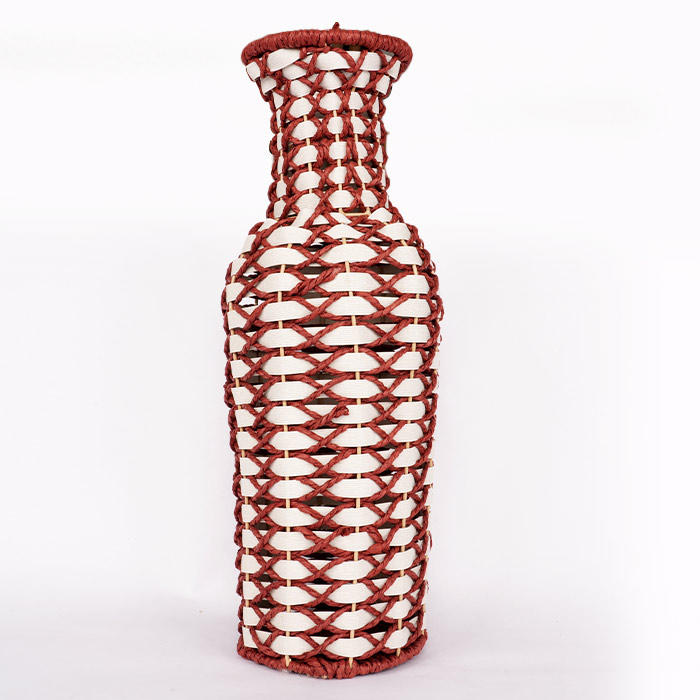
Table of Contents
Vase size are expected to be planned around viewing height, shelf depth, arrangement scale, stability, and the role each SKU plays in the retail range. Purchasing teams searching for woven vase sizing need a brief that connects the product to a real commercial job, not a collection of attractive reference photos.
The project becomes vulnerable when approving woven vase sizing from appearance alone. A visually appealing sketch can become top-heavy, exceed a shelf, crowd an arrangement, or duplicate another size once translated into production. A repeatable order needs measurable checkpoints that both buyer and supplier can use.
The discussion is relevant to home-decor retailers, importers, hospitality designers, private-label brands, and wholesale purchasing teams. It explains how to define woven vase sizing, inspect approval units, compare proposal details, and prepare an order file without relying on vague claims.
Start With Shelf Height and the Intended Visual Layer
In a real project involving woven vase sizing, vase size are expected to be planned around viewing height, shelf depth, arrangement scale, stability, and the role each sku plays in the retail range. A visually appealing sketch can become top-heavy, exceed a shelf, crowd an arrangement, or duplicate another size once translated into production. The buyer are expected to decide which outcome matters most before reviewing decorative options.
The working brief for woven vase sizing therefore starts here: Define placement, viewing distance, dry arrangement, shelf or floor clearance, target proportion, and the number of sizes needed in the range. That decision gives the maker a commercial context for every later drawing, approval unit, and packing question.
- Small shelf accent – connect this application to height and widest diameter.
- Medium tabletop centerpiece – connect this application to base footprint.
- Tall console or floor vase – connect this application to opening size.
- Coordinated size ladder for retail – connect this application to center-of-gravity considerations.
Build a Retail Size Architecture for the Range
A usable project file for woven vase sizing are expected to connect height and widest diameter with base footprint. Record who supplied each input, the revision date, and the decision that the information supports.
The next layer combines opening size with center-of-gravity considerations. These points influence how the item is reviewed in use, not merely how it appears in an isolated product image.
Complete the file with display clearance and progression between sizes. Keeping these details beside the product product brief prevents late packaging or assortment decisions from changing the approved result.
- Height and widest diameter – mark the source, approval status, and acceptable range.
- Base footprint – mark the source, approval status, and acceptable range.
- Opening size – mark the source, approval status, and acceptable range.
- Center-of-gravity considerations – mark the source, approval status, and acceptable range.
- Display clearance – mark the source, approval status, and acceptable range.
- Progression between sizes – mark the source, approval status, and acceptable range.
Allow for Weave Thickness and Internal Supports
Material language for woven vase sizing are expected to identify the visible material, internal structure, finish, lining, adhesive, and hardware where relevant. Clarify whether the product is a decorative dry vessel, a cover for an inner container, or another defined use; woven decorative vases are expected to not be assumed watertight.
If environmental or sourcing language will be used for woven vase sizing, specify evidence for the exact material and transaction. The Forest Stewardship Council chain-of-custody guidance explains how eligible forest-based material is tracked through a supply chain.
- Woven fiber and color
- Internal frame and base
- Opening and rim construction
- Decorative-use and water-contact statement
Balance Height, Opening, Base Width, and Stability
Dimensions for woven vase sizing are expected to be tied to the shelf, carton, display, room fixture, or product that sets the limit. Measure height, widest diameter, base footprint, opening, center of gravity, shelf clearance, and the arrangement material used for the display.
Test woven vase sizing with the real contents and placement rather than estimating capacity from a catalog image. Record critical tolerances separately from cosmetic variation.
- Overall height and widest diameter
- Base footprint and stability
- Opening size
- Shelf, tabletop, or floor clearance
- Nested or individual carton fit
Set Tolerances Where Silhouette Changes Matter
Construction checks for woven vase sizing must examine the areas that carry load, touch furniture, face the customer, or receive repeated handling. Vases amplify asymmetry, so base stability, vertical alignment, opening shape, frame symmetry, and consistent surface finish deserve specific checkpoints.
For lot inspection of woven vase sizing, purchasing teams may use a documented sampling plan. ISO 2859-1:2026 describes acceptance sampling by attributes, but the buyer still needs to define defect classes and the inspection level for the actual order.
- Vertical alignment
- Stable and level base
- Symmetrical opening
- Controlled weave tension
- No surface scuffs or loose ends
- Consistent proportions across the range
Coordinate Size With Colorways and Display Accessories
Customization of woven vase sizing needs a defined reason such as a fit, branding, merchandising, or handling requirement. A retail vase range needs coordinated proportions, color, weave, and packing while preserving a clear role for each size.
Each custom change to woven vase sizing needs one controlled reference: drawing, color target, artwork file, approved approval unit, or packing diagram. Record revisions so production does not follow an obsolete instruction.
- Height and silhouette
- Weave and color
- Base and opening details
- Private-label packaging
- Coordinated size assortment

Mock Up the Full Range on the Target Fixture
A approval unit of woven vase sizing supports approval only if its purpose is clear. Separate material inspect, construction approval, artwork approval, performance checks, and final packing approval when one approval unit cannot answer every question.
Test woven vase sizing in the intended setting and document the result. Style the approval unit with the intended dry arrangement, test it on the planned shelf or floor surface, and inspect it from every retail viewing angle. Keep the approved reference and revision record with the purchase file.
- Stability on the intended surface
- Measurement of height and profile
- Styling with the planned dry arrangement
- Shelf and sightline inspect
- Packed deformation trial
Document Measurement Points and Use Limitations
Requirements for woven vase sizing change with destination, intended use, materials, labeling, and whether the item reaches consumers. Ask for a bill of materials and product-specific documents instead of a generic certificate bundle.
Purchasing teams placing woven vase sizing on the EU consumer market are expected to inspect the European Commission product-safety guidance and obtain market-specific advice. Do not claim a certification, recycled content, or compliance status without valid evidence for the product.
- Decorative-use statement
- Bill of materials
- Inspection and stability criteria
- Label and artwork approval
- Packing and carton data

Match Carton Design to Tall and Irregular Profiles
Packing for woven vase sizing cannot be separated from the product, because compression, rubbing, moisture, and unused carton space can change both condition and logistics. Tall and hollow forms need support against bending, scuffing, and top-load pressure, with attention to base and opening protection.
The the woven vase program packing file are expected to state units per carton, orientation, protection, labels, and carton dimensions. Inspect IPPC information on ISPM 15 if regulated solid-wood packaging is used, and use the ICC Incoterms rules to clarify delivery responsibilities in the contract.
- Internal support for tall shapes
- Opening and base protection
- Surface separator
- Top-load and orientation inspect
- Unpacking without distortion
Approve Size Consistency Across Representative Samples
Place proposal details for woven vase sizing against the same brief. A concise answer with dimensions, materials, tolerances, approval unit stages, packing, and document scope is more useful than a long presentation that avoids specific commitments.
Before approving the woven vase program, turn unanswered questions into written actions. The final specify for quotation must distinguish the decision owner, target date, destination, quantity range, and files that form the approved product brief.
- Use and placement
- Dimensioned silhouette
- Material, frame, and color
- Size-range architecture
- Sample, inspection, and packing stages

| Decision area | Weak brief | Decision-ready brief |
|---|---|---|
| Use | Decorative vase | Dry vessel, cover, or display use defined |
| Size | Small, medium, large | Height, diameter, base, and opening stated |
| Stability | Stands upright | Surface and arrangement stability tested |
| Range | Matching designs | Each size has a named retail role |
| Variation | Handmade look | Profile and color range approved |
| Packing | Protected carton | Support, separators, orientation, and recovery tested |
Related Product and Sourcing Resources
Use these pages to compare real product structures and deepen the woven vase sizing brief before contacting a supplier:
- iron-frame woven vase collection – compare vase structures
- woven vase product example – inspect a decorative form
- rattan vase manufacturer guide – inspect production considerations
- woven vase styling guide – understand display applications
- contact Yixuan Crafts – discuss a vase collection
Frequently Asked Questions
What are expected to purchasing teams define before requesting woven vase sizing?
Define the use case, user, placement, dimensions, materials, quantity range, target market, customization, approval unit stages, packing, and delivery destination. A clear brief makes proposal details easier to compare.
How are expected to a production approval unit be evaluated?
Check the approval unit with real contents and in the intended setting. Inspect stability on the intended surface, measurement of height and profile, and styling with the planned dry arrangement, then record the approved result.
Can woven vase sizing be customized?
Customization may include height and silhouette, weave and color, and base and opening details. Feasibility and repeatability are expected to be confirmed through approval units before production.
Which documents are expected to a buyer specify?
Ask for an accurate bill of materials, product-specific test or inspection records where applicable, labeling details, packing specifications, and evidence supporting any environmental or certification claim.
How are expected to woven vase sizing be packed for export?
The packing method are expected to address internal support for tall shapes, opening and base protection, and surface separator. Approve the packed approval unit and carton information before production is complete.
Move Woven Vase Sizing From Brief to Approved Order
Good woven vase sizing sourcing is a sequence of decisions: application, product brief, material, fit, construction, approval units, documentation, packing, and delivery. When those decisions are written down, purchasing teams can compare proposals without relying on assumptions.
To discuss woven vase sizing for a retail, hospitality, or private-label program, contact Yixuan Crafts with reference images, dimensions, materials, quantity range, destination, and intended use. A detailed brief allows the team to confirm feasibility and identify the next approval unit step.
Word-of-mouth product collection
It covers a wide range of high-quality products, combining innovative design with practical performance, meeting the needs of various scenarios and gaining wide recognition from users.
Latest post
Contact Info
Shangshihe Village, Yushan Town, Linshu County, Shandong Province

Ingenious work, quality presentation
It brings together a series of core products, presenting a panoramic view from design details to functional advantages, intuitively presenting quality and innovation.
What is the wood material and environmental friendliness of wooden boxes?
Made of FSC certified ash wood and finished with natural wood wax oil, it complies with EU environmental standards.
How to prevent moth damage and cracking through daily maintenance?
Wipe it with a dry cloth every month to avoid moisture. You can apply a small amount of beeswax to maintain the wood surface.
Monthly production capacity and delivery time for large orders?
With a monthly output of 30,000 pieces and a 6,000-square-meter base, we have sufficient materials and large orders can be delivered in batches.
What packaging is used for international shipping? Is it moisture-proof?
Waterproof kraft paper + foam corner protectors, with silica gel desiccant, suitable for sea/air transportation.
Can it be adapted to different home styles such as minimalist and retro?
Supports color change (original wood / white paint) and pattern adjustment to match a variety of scenes.
Are manual differences considered quality issues?
These are normal traces of craftsmanship. Each piece retains its uniqueness and is qualified as long as it does not affect its use.