
Single News
How to Choose a Reliable Rattan Basket Manufacturer for Wholesale Orders
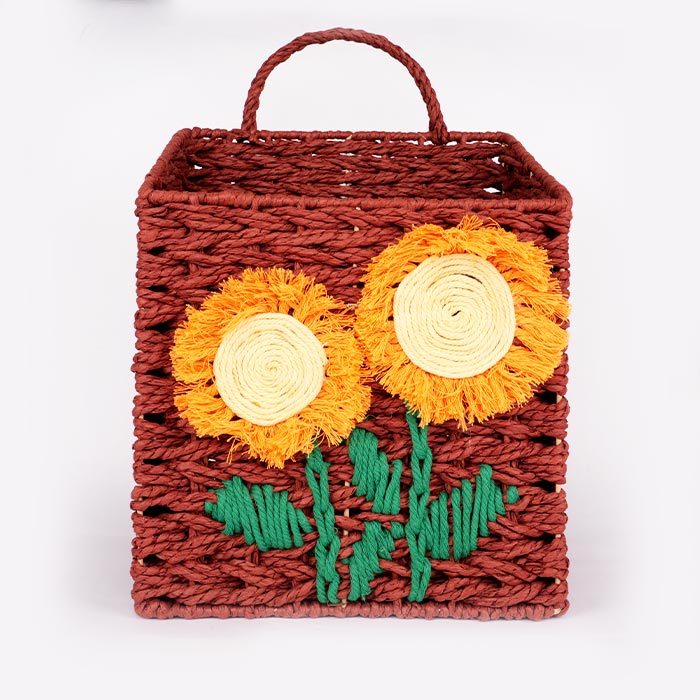
The rattan basket industry has shifted from a traditional handicraft supply chain into a structured global sourcing category. For importers, retailers, and e-commerce brands, choosing the right rattan basket manufacturer is no longer just a procurement task—it directly affects product consistency, brand positioning, and long-term customer retention.
Most sourcing problems in this category don’t come from demand, but from mismatched supplier capability. This article breaks down how experienced buyers evaluate factories, how production really works behind the scenes, and what actually matters when selecting a long-term manufacturing partner.
Table of Contents
Understanding the Real Role Behind a Rattan Basket Manufacturer

In practice, not every supplier offering rattan baskets is a manufacturer. This distinction is where most sourcing mistakes begin.
A real factory typically handles:
- Material selection and preparation
- Structural weaving and shaping
- Reinforcement and finishing processes
- Export-ready packaging and inspection
What looks like a simple woven basket actually involves multiple controlled stages. When any of these stages are outsourced, consistency becomes harder to manage—especially in bulk orders.
A manufacturer is also the point where product decisions are made, not just executed. That includes weave density, structural stability, and even final appearance adjustments requested by different markets.
Why Direct Factory Sourcing Changes the Entire Buying Experience
Buyers often switch to factory-direct sourcing after facing repeat issues such as inconsistent quality or delayed adjustments.
Working directly with a rattan basket manufacturer usually results in:
- Fewer communication layers during production
- Faster adjustment during sampling stages
- More predictable output across batches
- Better control over packaging and presentation
The difference becomes especially clear in wholesale distribution, where small inconsistencies multiply across large volumes.
What Actually Happens Inside Rattan Basket Production
Unlike mass plastic manufacturing, rattan basket production still relies heavily on manual craftsmanship combined with structured quality control.
A typical production flow looks like this:
Raw material preparation → Fiber selection → Moisture adjustment → Hand weaving → Shape correction → Structural tightening → Surface finishing → Inspection → Packing
What matters most is not just the steps themselves, but how strictly each stage is controlled.
For example:
- Slight variation in fiber thickness changes flexibility
- Uneven drying affects long-term durability
- Inconsistent weaving tension impacts load-bearing strength
These are details buyers often don’t see but directly influence product performance in retail environments.
Wholesale Orders: Where Manufacturer Capability Really Shows

Small sample orders rarely reflect factory capability. The real test begins with bulk production.
Experienced buyers typically evaluate:
- Batch-to-batch consistency
- Color and texture uniformity
- Structural stability under repeated production cycles
- Packaging alignment for international shipping
A reliable rattan basket manufacturer will maintain stable output even when order volume increases, without drifting in quality or finish.
This is where many suppliers fail—not in making one good sample, but in repeating it at scale.
OEM and Custom Development: More Than Just Design Changes
Customization in this category is often misunderstood as simple size or shape adjustments. In reality, OEM production involves structural redesign decisions.
Manufacturers capable of real OEM support can adjust:
- Weaving density for different market preferences
- Frame reinforcement for heavier usage scenarios
- Shape adaptation for storage or decorative use
- Branding integration into natural material structures
ODM capability goes even further, where suppliers develop new product directions based on market demand instead of copying existing designs.
This is especially relevant for private label sellers and interior product brands looking for differentiation.
How to Evaluate Whether a Manufacturer Is Actually Reliable
Instead of focusing on surface-level claims, experienced buyers usually look at operational indicators.
A reliable supplier tends to show:
- Stable production capacity over time
- Consistent sample vs bulk quality
- Clear material sourcing process
- Organized workflow during sampling stage
- Responsiveness during technical discussions
One overlooked factor is communication accuracy. If a factory understands production constraints clearly, it usually reflects real manufacturing experience.
Another practical test is how they handle revisions. Real manufacturers adjust based on structural feasibility, not just visual preference.
Sustainability Is No Longer a Marketing Angle—It’s a Requirement

Rattan baskets naturally align with sustainable material trends, but not all production processes are equally eco-conscious.
Modern manufacturing tends to focus on:
- Reduced chemical treatment during processing
- Controlled drying instead of artificial acceleration
- Efficient material utilization to reduce waste
- Use of renewable plant-based fibers
For brands targeting eco-conscious markets, sourcing from a responsible rattan basket manufacturer is becoming part of brand credibility rather than just supply chain preference.
Global Demand Patterns and Where Growth Is Actually Happening
Demand for woven storage products has become more segmented across regions.
Instead of a single global trend, we now see:
- Strong demand for minimal natural storage in home organization markets
- Decorative use in interior design and boutique retail
- Functional storage adoption in hospitality environments
- Increased adoption in online home décor stores
Interestingly, the growth is not driven by one category but by the overlap of lifestyle design and functional storage needs.
Manufacturers who understand these distinctions usually perform better in export markets because they adapt product structure to usage scenarios.
Common Mistakes Buyers Make When Selecting Suppliers
Most sourcing issues are predictable and avoidable.
Typical mistakes include:
- Choosing suppliers based only on visual samples
- Ignoring production scalability
- Overlooking packaging quality for international logistics
- Not verifying actual manufacturing capability
- Failing to test consistency across multiple batches
The biggest risk is assuming that all suppliers in this category operate at the same level of craftsmanship and control. In reality, capability gaps are significant.
Long-Term Value Comes From Stable Manufacturing Partnerships

Short-term sourcing decisions often focus on immediate needs. However, long-term growth depends on supply stability.
A consistent partnership with a capable rattan basket manufacturer allows:
- Predictable production planning
- Faster product iteration cycles
- Better alignment with market trends
- Reduced sourcing risk over time
For growing brands, this stability often matters more than any single order decision.
Conclusion
Selecting a rattan basket manufacturer is less about finding a supplier and more about identifying a production partner capable of long-term consistency, customization, and scale.
The strongest manufacturing relationships are built on clarity—clear production capability, clear communication, and clear quality expectations. As demand for natural and sustainable storage products continues to expand globally, manufacturers that maintain stable craftsmanship and flexible OEM capability will remain the most valuable partners in the supply chain.
A well-chosen factory is not just part of procurement—it becomes part of the brand’s long-term structure.
FAQ
Q1: What does a rattan basket manufacturer actually do?
A rattan basket manufacturer handles the full production process, including raw material selection, weaving, shaping, finishing, quality inspection, and export packaging.
Q2: Why should I buy directly from a rattan basket manufacturer instead of a trading company?
Direct sourcing improves quality consistency, communication efficiency, customization flexibility, and long-term supply stability for wholesale orders.
Q3: Can a rattan basket manufacturer support custom OEM or ODM orders?
Yes. Most experienced manufacturers offer OEM/ODM services, including custom sizes, weaving styles, branding, and packaging solutions.
Q4: How can I check if a rattan basket manufacturer is reliable?
Check production capability, sample consistency, export experience, material sourcing transparency, and responsiveness during communication and sampling.
Q5: Are rattan baskets suitable for sustainable product lines?
Yes. Rattan is a natural, renewable material widely used in eco-friendly home storage and interior design products due to its low environmental impact.
Word-of-mouth product collection
It covers a wide range of high-quality products, combining innovative design with practical performance, meeting the needs of various scenarios and gaining wide recognition from users.
Latest post

Contact Info
Shangshihe Village, Yushan Town, Linshu County, Shandong Province

Ingenious work, quality presentation
It brings together a series of core products, presenting a panoramic view from design details to functional advantages, intuitively presenting quality and innovation.
What is the wood material and environmental friendliness of wooden boxes?
Made of FSC certified ash wood and finished with natural wood wax oil, it complies with EU environmental standards.
How to prevent moth damage and cracking through daily maintenance?
Wipe it with a dry cloth every month to avoid moisture. You can apply a small amount of beeswax to maintain the wood surface.
Monthly production capacity and delivery time for large orders?
With a monthly output of 30,000 pieces and a 6,000-square-meter base, we have sufficient materials and large orders can be delivered in batches.
What packaging is used for international shipping? Is it moisture-proof?
Waterproof kraft paper + foam corner protectors, with silica gel desiccant, suitable for sea/air transportation.
Can it be adapted to different home styles such as minimalist and retro?
Supports color change (original wood / white paint) and pattern adjustment to match a variety of scenes.
Are manual differences considered quality issues?
These are normal traces of craftsmanship. Each piece retains its uniqueness and is qualified as long as it does not affect its use.