
Single News
Christmas House Decorations Guide: How to Style Natural Holiday Displays for Homes and Retail

Table of Contents
Christmas house decorations help turn a plain room into a warm seasonal setting, but choosing the right pieces is not only about adding more ornaments. Buyers need decorations that fit the space, match existing products, store easily, and create a holiday mood without feeling cluttered. This guide explains how to choose Christmas house decorations for homes, retail shelves, hospitality spaces, and natural holiday collections, with practical advice on materials, scale, display planning, care, and product presentation.
Start with the room, not the product
The best Christmas house decorations begin with a clear understanding of where they will be used. A small apartment, a boutique shelf, a hotel reception counter, and a family dining room all need different levels of decoration. If the display space is narrow, the buyer may need slim standing pieces, small hanging accents, or tabletop decor. If the room is large, the display may need stronger shapes that can be seen from a distance.
This is why Christmas house decorations should be chosen as a system rather than a random set of items. A product may look attractive in a close-up photo, but it still has to work with furniture, lighting, wall color, storage habits, and customer traffic. Retail buyers should imagine how the decoration will sit on a shelf and how a customer will understand it within three seconds.
For home users, a practical plan is to choose one main display area first: a mantel, console table, sideboard, entry bench, dining surface, or window shelf. Then choose Christmas house decorations that support that area instead of spreading small items everywhere. A focused display often feels more polished than many scattered objects.
Choose a visual direction before buying
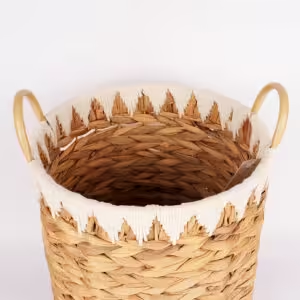
Natural Christmas house decorations usually work well when they follow a clear material story. Wood, woven textures, pine cone forms, soft neutral finishes, and simple hanging pieces can create warmth without overwhelming the home. A natural direction also pairs well with rattan baskets, paper rope lanterns, candle holders, and wooden ornaments.
A traditional direction may use stronger red, green, or gold accents, while a modern direction may stay mostly white, brown, gray, and soft metallic tones. None of these choices is automatically better. The important point is consistency. Christmas house decorations look more intentional when the buyer limits the palette and repeats materials across the display.
Retailers should build small style stories instead of mixing every holiday product together. One shelf can focus on natural wood and woven decor. Another can focus on candle holders and warm table settings. Another can show hanging ornaments and compact Christmas house decorations for small spaces. Clear stories make buying easier for customers.

Use scale to create a complete holiday scene
Scale is the part many buyers overlook. A group of Christmas house decorations should include height, width, and small detail. If every item is the same size, the display can look flat. A taller house-shaped piece, a lower candle holder, a small hanging ornament, and a woven basket can create a layered scene without needing too many products.
For retail displays, a good rule is to choose one anchor piece, two supporting items, and several small accents. The anchor catches attention. The supporting items explain the style. The small accents make the scene feel complete and give shoppers an easier entry point. Christmas house decorations become easier to sell when customers can see how pieces work together.
For home styling, scale should respect daily life. A dining table still needs room for plates. An entry console still needs space for keys. A shelf still needs visual breathing room. Christmas house decorations should add atmosphere, not make the room harder to use.
| Display area | Best decoration mix | Practical reason |
|---|---|---|
| Entry table | One anchor piece with a woven tray | Creates a warm welcome without crowding daily items |
| Retail shelf | Tall item, medium accent, small ornaments | Helps customers see a complete purchase story |
| Dining sideboard | Candle holders and low house decor | Adds atmosphere while keeping sight lines open |
| Window display | Repeated shapes with natural textures | Builds seasonal impact from outside the store |
Select materials that feel warm and honest
Christmas house decorations can be made from many materials, but natural-looking products often need careful description. If a piece uses wood, paper rope, iron frame, woven material, or mixed craft construction, the product copy should say so clearly. Honest material language helps customers understand what they are buying and prevents disappointment.
Wooden and woven textures bring a softer holiday feeling than shiny plastic surfaces. They also pair naturally with existing home decor. A customer who already owns baskets, rattan vases, or linen textiles can add Christmas house decorations without changing the whole room. This makes natural decor especially useful for buyers who want seasonal warmth without a loud theme.
For general background on seasonal traditions, neutral resources such as the Wikipedia page about Christmas decoration can help readers understand the broad category. Product claims, however, should stay specific to the item itself: material, size, care, styling, and intended use.
Plan displays for retail customers
Retail customers do not always know how to combine Christmas house decorations. A good display solves that problem for them. Place related items together: one house decoration, one candle holder, one basket or tray, and one set of small hanging ornaments. The customer can copy the scene at home or buy only the piece they need.
Lighting also matters. Warm light can make natural textures look inviting, but the display should not rely on lighting that the customer will not have at home. Christmas house decorations should still look attractive in ordinary daylight. Retail photography should show both close texture and full scale so shoppers understand the product before ordering.
Avoid overcrowding the shelf. Too many small seasonal items can make even good products look inexpensive. Give Christmas house decorations space around the silhouette, especially if the design includes cutouts, roof shapes, natural branches, or woven details. Space makes the object easier to read and helps the display feel calmer.
Match decorations with existing product categories
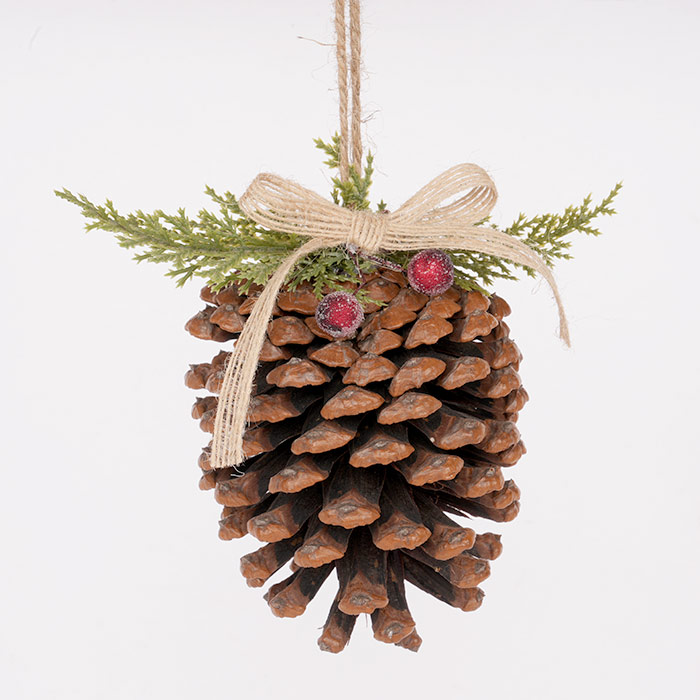
A strong holiday assortment is connected. Christmas house decorations can sit beside wood ornaments, pine cone hanging pieces, Christmas candle holders, and compact tree accents. This connection matters for retailers because customers often buy holiday decor in groups. If the products share color and material, the basket size can grow naturally without forced selling.
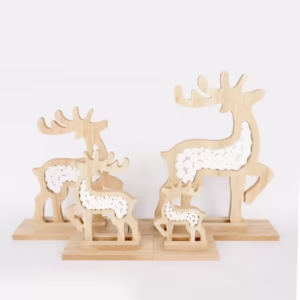
For Yixuan-style natural decor, the strongest pairings are woven baskets for grounding, candle holders for warmth, wooden ornaments for detail, and house decorations for structure. Each product has a role. The house shape gives the scene a story, the candle holder adds atmosphere, the basket organizes the base, and the ornament supplies small points of interest.
Home users can apply the same thinking. Instead of buying many unrelated Christmas house decorations, choose pieces that repeat one material or color. A small wooden house, a pine cone hanging piece, and a neutral candle holder can feel more refined than a large group of mismatched items.
Write product descriptions that answer real questions
Good product copy for Christmas house decorations should answer practical questions quickly. What is the item made from? Where can it be placed? Is it for tabletop, shelf, hanging, or window display? How should it be cleaned? What other products does it match? These answers are more useful than generic holiday language.
The title should be clear and not overloaded. A phrase such as Christmas house decorations can be used naturally, but it should not be repeated in every sentence on a product page. The description should focus on use cases: entryway decor, mantel display, shelf styling, retail windows, holiday tables, and giftable seasonal accents.
For search intent, readers usually want help choosing or styling, not a broad history lesson. A useful article or product page should help them avoid mistakes: buying the wrong scale, mixing too many colors, ignoring storage, using unclear material descriptions, or placing delicate decor where it may be damaged.
Care and storage make seasonal decor more valuable
Christmas house decorations are often used for only part of the year, so storage is part of the buying decision. Products should be packed away dry, protected from heavy pressure, and kept in a container that preserves their shape. This is especially important for wooden, woven, or hand-finished pieces that depend on surface texture.
Cleaning should be simple. A dry soft cloth or gentle brush is usually enough for most decorative pieces. Buyers should avoid soaking natural materials, using harsh cleaners, or placing decor near moisture unless the product is specifically designed for that setting. Clear care advice makes Christmas house decorations feel more dependable.
Retailers can add care notes to product pages, shelf cards, or packaging inserts. This small step helps customers keep the item longer and reduces confusion after purchase. It also positions Christmas house decorations as considered home accents rather than disposable seasonal clutter.
Avoid common buying mistakes
The first mistake is buying too many small items with no anchor piece. Small Christmas house decorations can be charming, but they need a larger shape or clear base to feel intentional. Without an anchor, the display may look scattered. A house-shaped item, branch tree, lantern, or candle holder can create that anchor.
The second mistake is ignoring color temperature. Warm natural tones, bright whites, cool grays, and deep browns can all work, but they should be planned. If every product has a different undertone, the display may feel accidental. Christmas house decorations look more premium when the palette is controlled.
The third mistake is forgetting storage and durability. A delicate display item may be perfect for a shelf but poor for a high-traffic store counter. Buyers should match Christmas house decorations to real handling conditions and choose packaging that protects the product during shipping and storage.
Plan reorders and seasonal refreshes early
Retailers should think beyond the first shipment of Christmas house decorations. If a style sells well in October or early November, there may be limited time to reorder before peak holiday traffic. Buyers can reduce that pressure by choosing a core group of products that can be repeated, then adding a smaller number of new accents each season.
A reorder plan should include approved photos, material notes, dimensions, color references, and packaging details. These records make it easier to keep Christmas house decorations consistent from one order to the next. They also help sales teams answer questions when customers compare a new shipment with last year?? display.
Seasonal refreshes do not always require a completely new collection. A retailer can keep the same natural Christmas house decorations and change the supporting items: different hanging ornaments, a new candle holder shape, a fresh basket texture, or a slightly different branch accent. This approach protects the core style while giving the shelf a renewed feeling.
For importers and wholesalers, the best assortment is usually a balance of reliable repeat pieces and selective novelty. Too much novelty can make the range hard to merchandise, while too little change can make the display feel stale. Christmas house decorations work best when they provide a stable holiday foundation that can be refreshed with smaller details.
This planning also helps with content. Blog posts, product pages, and social images can introduce Christmas house decorations as part of a practical decorating system, not just a one-time purchase. Customers are more likely to trust a product when the styling advice feels usable and the assortment looks organized.
Checklist before placing an order
Before ordering Christmas house decorations, confirm the target room, size range, material description, color direction, care notes, packaging plan, and display story. If the item is for wholesale, also confirm photography angles, carton protection, and whether the product fits existing categories such as ornaments, candle holders, baskets, or natural holiday decor.
For home users, the checklist is simpler: choose one display area, select one anchor piece, add two supporting textures, keep the color palette narrow, and leave space around the arrangement. Christmas house decorations should make the home feel warmer and easier to enjoy, not harder to use.
When chosen thoughtfully, Christmas house decorations can do more than fill a seasonal shelf. They can create a welcoming winter scene, support natural home styling, and help retailers present a clear holiday story. The strongest pieces are practical, honest in material, easy to care for, and flexible enough to work with the customer?? existing decor.
Word-of-mouth product collection
It covers a wide range of high-quality products, combining innovative design with practical performance, meeting the needs of various scenarios and gaining wide recognition from users.
Latest post

Contact Info
Shangshihe Village, Yushan Town, Linshu County, Shandong Province

Ingenious work, quality presentation
It brings together a series of core products, presenting a panoramic view from design details to functional advantages, intuitively presenting quality and innovation.
What is the wood material and environmental friendliness of wooden boxes?
Made of FSC certified ash wood and finished with natural wood wax oil, it complies with EU environmental standards.
How to prevent moth damage and cracking through daily maintenance?
Wipe it with a dry cloth every month to avoid moisture. You can apply a small amount of beeswax to maintain the wood surface.
Monthly production capacity and delivery time for large orders?
With a monthly output of 30,000 pieces and a 6,000-square-meter base, we have sufficient materials and large orders can be delivered in batches.
What packaging is used for international shipping? Is it moisture-proof?
Waterproof kraft paper + foam corner protectors, with silica gel desiccant, suitable for sea/air transportation.
Can it be adapted to different home styles such as minimalist and retro?
Supports color change (original wood / white paint) and pattern adjustment to match a variety of scenes.
Are manual differences considered quality issues?
These are normal traces of craftsmanship. Each piece retains its uniqueness and is qualified as long as it does not affect its use.